
Roku vs Apple TV: Which Platform Should Content Creators Target First?
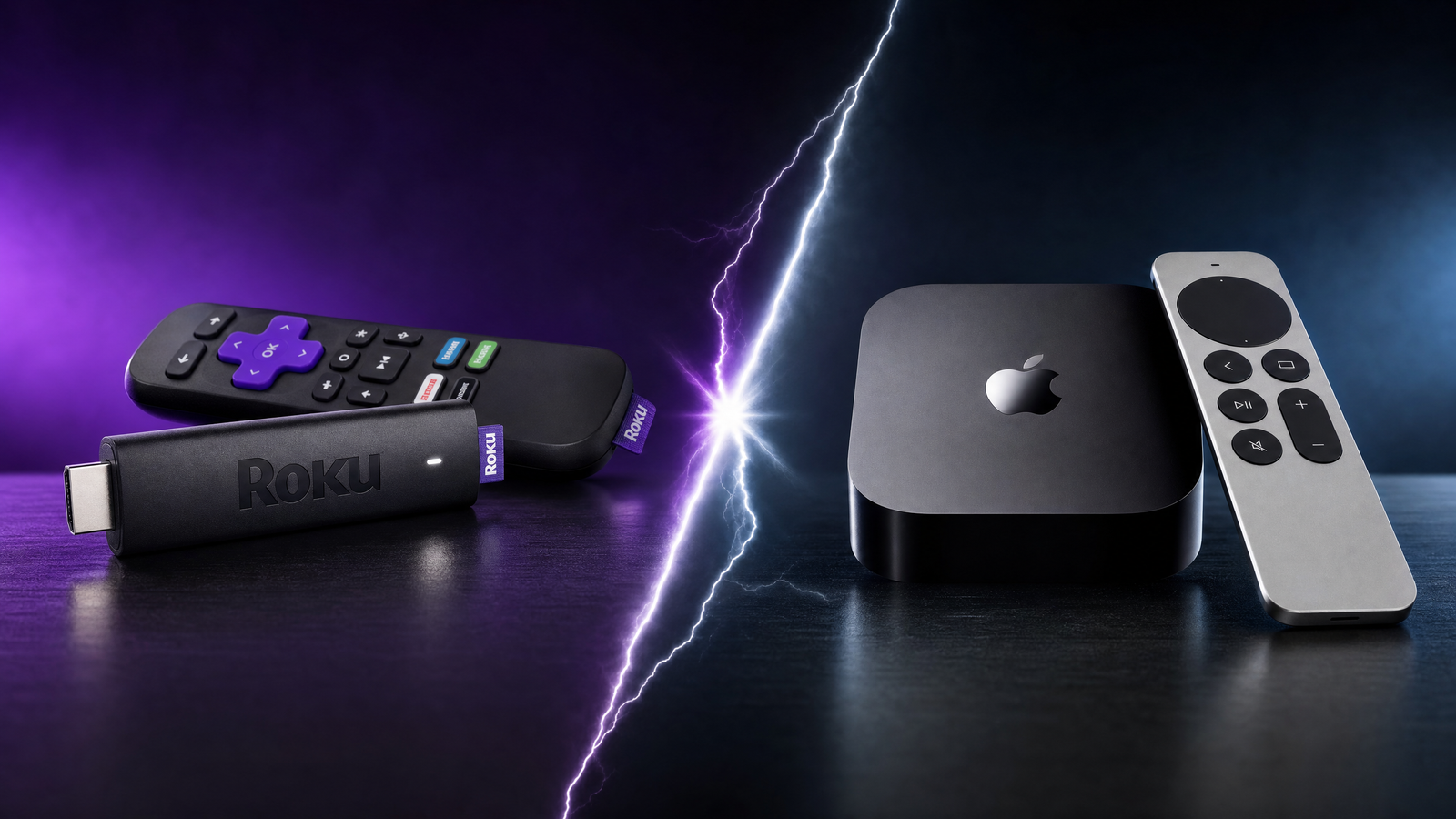
Roku vs Apple TV: Which Platform Should Content Creators Target First?
If you are a content creator, ministry, or business looking to launch your own streaming channel, you face a critical decision: which platform should you build for first? The debate of Roku vs Apple TV is one of the most common discussions in the Connected TV (CTV) space.
Both platforms offer massive audiences, but they cater to different demographics and have vastly different development ecosystems. In this guide, we will break down the Roku vs Apple TV comparison from the perspective of a broadcaster looking to launch an app.
1. Market Share and Audience Reach
Roku: Roku is the undisputed king of market share in North America. With tens of millions of active accounts, Roku devices are affordable, ubiquitous, and built directly into many smart TVs (Roku TVs). If your primary goal is sheer volume and reaching the widest possible demographic—especially middle-class and budget-conscious households—Roku is essential.
Apple TV: Apple TV has a smaller overall market share compared to Roku, but it boasts a highly lucrative, premium audience. Apple TV 4K devices are expensive, and the users who buy them are deeply entrenched in the Apple ecosystem. If your monetisation strategy relies on premium subscriptions (SVOD) or high-ticket in-app purchases, Apple TV users have a proven track record of higher spending.
2. Development and Coding Languages
The technical side of the Roku vs Apple TV debate is where the platforms diverge the most.
Roku Development: Roku channels are built using BrightScript and the SceneGraph framework. BrightScript is proprietary to Roku; it is not used anywhere else. This means finding developers who are highly skilled in Roku development can be challenging and expensive. However, Roku’s interface is heavily templated, which can speed up basic app creation.
Apple TV (tvOS) Development: Apple TV apps are built using Swift and Objective-C within Xcode. Because tvOS is based on iOS, millions of developers worldwide already know the underlying language. If you already have an iPhone or iPad app, porting that codebase to Apple TV is a much smoother process than starting from scratch on Roku.
3. Monetisation and Fees
Roku: Roku offers excellent monetisation options. You can run ads (AVOD) using Roku’s ad framework, or charge subscriptions (SVOD). If you use Roku Pay for subscriptions, Roku takes a standard 20% revenue share.
Apple TV: Apple TV also supports ads and subscriptions. However, Apple is notoriously strict about its payment systems. Any digital subscription sold through your tvOS app must use Apple’s In-App Purchase system. Apple takes a 30% cut for the first year of a subscription, which drops to 15% in the second year.
4. Certification and Approval Process
Roku: Roku’s certification process is strict regarding performance (load times, crash rates) and UI consistency. The review process can take several weeks, and Roku will outright reject apps that do not meet their deep-linking and performance criteria.
Apple TV: Apple’s App Store Review process is famous for its rigor. Apple reviewers look not only at performance but also at design aesthetics, content rights, and user experience. While strict, Apple’s review process is generally faster than Roku’s, often taking just a few days.
Roku vs Apple TV: The Verdict
So, which should you choose? – Choose Roku first if: Your goal is maximum reach, you want to run an ad-supported (free) channel, or you are a ministry wanting to reach everyday households. – Choose Apple TV first if: You already have an iOS app, your audience is highly affluent, or your business model relies on premium, high-priced subscriptions.
Why Not Both?
In reality, the most successful streaming networks do not choose between Roku vs Apple TV—they launch on both.
At KTV Channels, we specialise in multi-platform OTT development. We build and launch custom, branded TV channels simultaneously on Roku, Apple TV (tvOS), and iOS. We handle the distinct coding languages, the separate design requirements, and the complex certification processes for both platforms.
Ready to dominate the living room? Contact KTV Channels today to launch your network on both Roku and Apple TV.